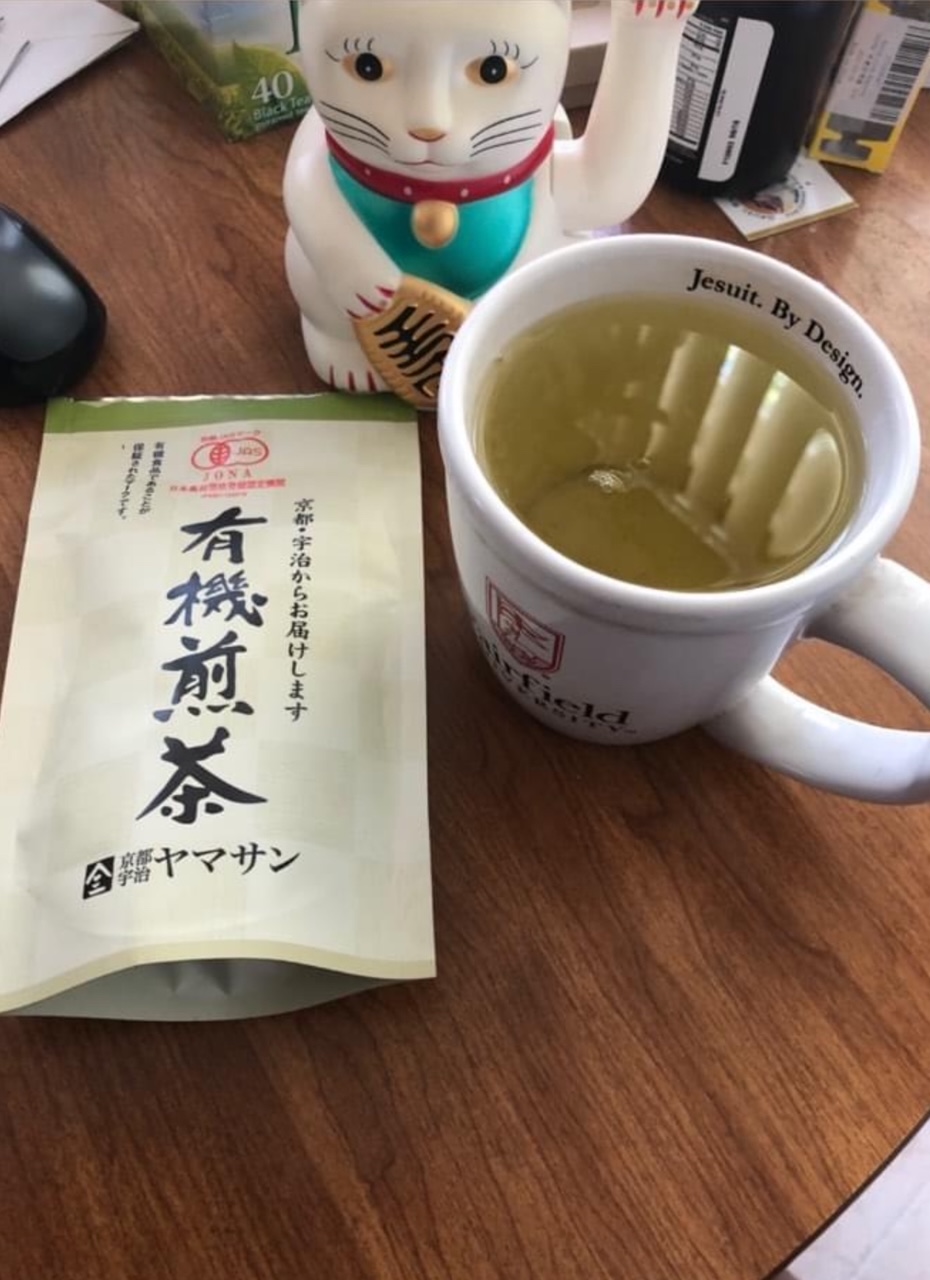
Kyoto Yamasan’s Loose Leaf Sencha
あたかも地球が回転する軸であるかのように、お茶をゆっくりと敬虔に飲みましょう。未来に急ぐことなく、ゆっくりと均等に。実際の瞬間を生きましょう。この瞬間だけが人生なのです。
Or, in English, this Japanese proverb translates to “Drink your tea slowly and reverently, as if it is the axis on which the world earth revolves – slowly, evenly, without rushing toward the future; Live the actual moment. Only this moment is life.”

Enjoyment of Japanese teas and other culinary delights certainly warrants that reflective, methodical pace not only to enjoy the tea, food and other beverages, but also to fully enjoy life’s gentle and finer moments.
Sencha is a favorite of mine, and I had the pleasure of having teas with friends and loved ones from Japan. Sencha was always a reliable and soothing offering. Thanks to a strong friendship between Japan and the United States, finding quality Japanese teas in the US is easy. Yamasan of Kyoto is one of Japan’s finest exporters of tea.
The organic sencha offered by Kyoto Yamasan is a delicate yet complex loose leaf sencha (bags are also available) grown in Kyoto’s Uji River Valley. The Uji Rver is Japan’s most renowed green tea growing region. Near Kyoto, the Uji’s banks are adored by tea fields, old temples and shops, Sencha is ubiquitous in Japan and accounts for almost 80 percent of all Japanese teas produced.
Tasting Notes
Yamasan’s organic sencha is roasted with infrared lamps to draw out the unami flavors. These are the rich and savory flavors deep. Umani literally translates to pleasant savory flavor. How it is served, hot or cold, will affect its flavors. I enjoy both styles. The color however remains consistent with a light green to yellow hues.
When this is served hot, there are hints of vegetal flavors and scents, as well as some seaweed and kiwi fruit notes. It remains refreshing throughout the entire draw. When it is served chilled, the sweater fruity notes are more pronounced. Green teas tend to lean more sweat when they are served cold. If it is iced as opposed to chilled, some Sakura or cherry notes can also be detected.
All of Yamasan’s teas are certified as JAS organic by Japan’s Ministry of Agriculture, Forestry and Ministry, the highest standard of organic certifications in Japan.
Serving Notes:
Green teas are very flexible in that they can be just as enjoyable hot or cold. For serving hot, I found temperatures just below boiling to be ideal. Too much heat can dull some of the flavors and make the color more a dark goldenrod or brown. I found a rage of 170 to 175 degrees Fahrenheit (approximately 77 to 79 degrees Celius). I let the tea steep for at least 4 minutes.
Cold serving is a little different. Cold or no warmer than room temperature water should be used. I will let the leaves steep 3-4 hours if its room temperature, or overnight if it is being chilled. Once the room temperature tea Is steeped, I will store it in my refrigerator to be consumed in the next day. I also add more tea to the steeping process to bring out the flavors and colors. A rule of thumb is 8 to 9 grams of loose leaf for a standard tea pot. A little more can bring out a bolder flavor, so it will not hurt the preparation at all.
Lastly, Kyoto Yamasan has its own Amazon store for online retail in North America. They can be found in grocers with good Asian food and tea selections.
Leave a Reply